
The Deep Kitchen Cabinet Dilemma: 5 Zero-Reno Tricks to Stop Losing Items in the Back
Stop bending into dark 24-inch cabinet corners and buying duplicate spices. Here are 5 renter-friendly, zero-renovation systems to reclaim deep storage for under $45.

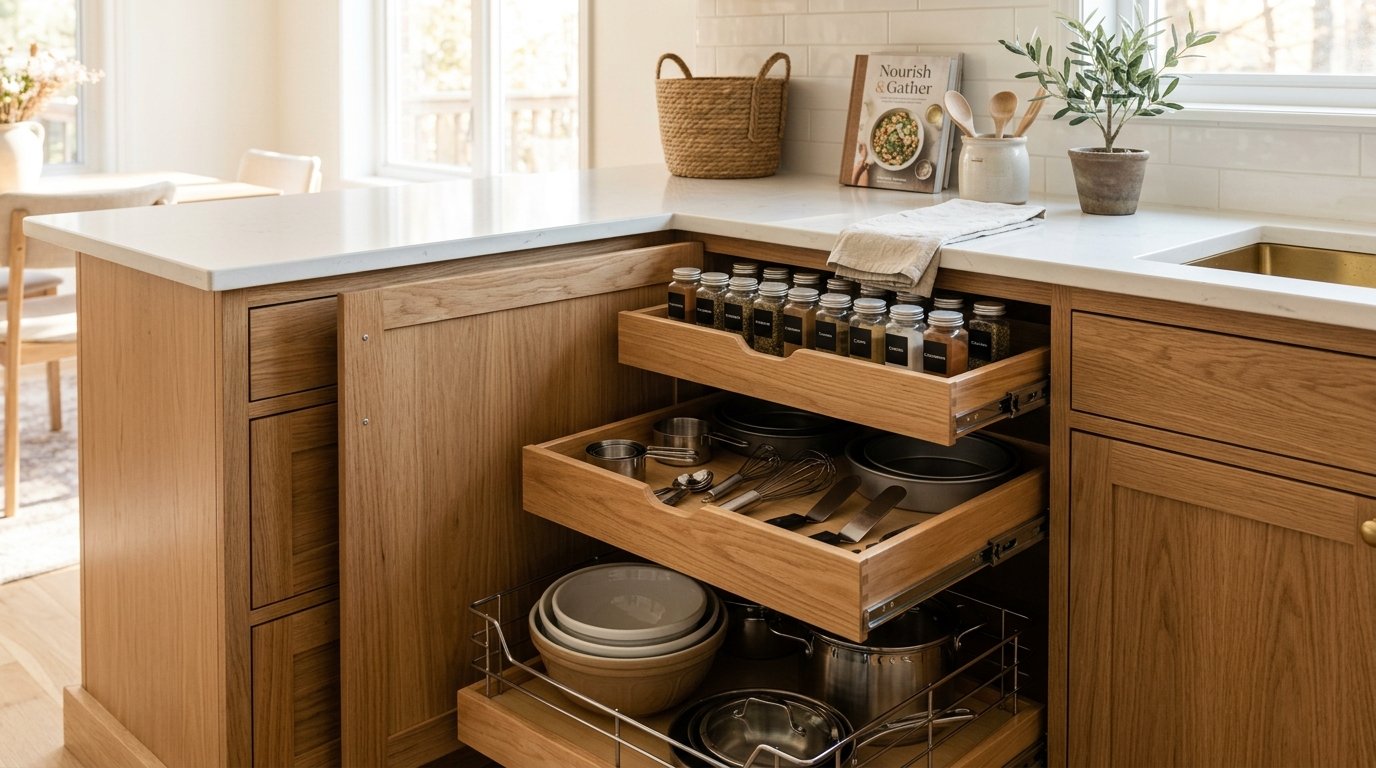
Standard kitchen base cabinets are built to an industry-standard depth of 24 inches. On paper, that sounds like a generous amount of storage for a modern home. In practice, however, anything pushed past the 14-inch mark enters a culinary black hole: canned beans from three years ago, forgotten fondue pots, and duplicate spices you repurchased simply because you couldn’t see the first container.
If you are struggling with deep kitchen cabinets, you are not alone. Traditional base storage layouts force you to bend down, peer into shadowy recesses, and unstack heavy cookware just to reach a single skillet. But you do not need an expensive remodeling project to reclaim your kitchen space.
• Zero-reno solutions rely on gliding tracks and pull-out trays rather than replacing cabinetry or drilling into framework.
• Clear acrylic storage bins act as manual drawers — pull the whole container forward to scan your shelves in seconds.
• Reserve the back 8 inches exclusively for lightweight overflow backup goods, never daily essentials.
Why Deep Storage Spaces Cause Daily Kitchen Friction
The fundamental ergonomic issue with dark base storage is visual and physical accessibility. When an organizing system requires high friction — having to remove four heavy pots to access a fifth — family members naturally abandon order. Items get shoved blindly into the void, leading to wasted groceries, expired ingredients, and persistent countertop clutter.
By transforming deep kitchen cabinets with modular, pull-out storage accessories, we eliminate physical friction. When every ingredient and frying pan can be inspected from an upright standing position in under three seconds, order maintains itself effortlessly without constant tidying.
5 Zero-Renovation Systems for Deep Kitchen Storage
Adhesive Heavy-Duty Pull-Out Gliders (No Screws Required)
High-quality adhesive tracks comfortably support up to 45 lbs of cast iron Dutch ovens, stainless steel pots, or canned goods with a silky-smooth ball-bearing extension. They pull the entire 24-inch depth directly out into the ambient light of your kitchen, turning frustrating recesses into accessible drawer space.
The 'Manual Drawer' Deep Acrylic Bin Method
Group items strictly by routine: breakfast grains in Bin A, savory broths and dry pastas in Bin B, and baking essentials in Bin C. To access an item in the rear, simply slide the entire bin forward onto your kitchen counter. You get full drawer utility without installing a single track or tightening a single screw.
Tiered Stadium Risers for Canned Goods & Bulk Jars
This single adjustment prevents buying duplicate cans of coconut milk or diced tomatoes, turning deep kitchen cabinets into an organized, grocery-store style inventory where every expiration date is immediately visible at a glance.
Oversized 14-Inch Turntables (Lazy Susans)
One effortless spin brings specialty vinegars, cooking oils, and bulk condiments directly to your fingertips without knocking over adjacent glassware. It is the fastest zero-tool upgrade for blind corner storage dilemmas.
The Back-Zone Overflow Backup Protocol
Your everyday frying pans, cutting boards, and daily cookware must live strictly within the front 14 inches. Creating this distinct boundary ensures that the items you use daily never get buried under occasional equipment.
Common Organizing Mistakes to Avoid
The most frequent organizing mistake is stacking mismatched mixing bowls and pans inside one another without dividers. While nesting saves space initially, unstacking five heavy bowls every time you cook dinner creates immediate frustration. Instead, use vertical wire file sorters to store baking sheets, muffin tins, and cutting boards upright on edge.
Another pitfall is using short, shallow bins. Containers that are only 12 inches deep will inevitably slide backward into dark corners, recreating the very dead space you were trying to eliminate. Always measure your interior cabinet depth from front door edge to back wall before purchasing organizers.
Weight Distribution and Shelf Sag Prevention
Before loading heavy enameled cast iron or cases of canned sparkling water into base shelving, inspect the shelf support pins. Standard plastic 5mm shelf pins can shear under sustained loads exceeding 35 pounds. Replace cheap plastic pins with solid brass or nickel-plated steel L-bracket supports featuring rubber vibration pads ($6 for a pack of 20).
Place your heaviest items — such as Dutch ovens, slow cookers, and stand mixer attachments — on the bottom floor of the cabinet where weight rests directly on the foundation rather than on adjustable floating shelves. This preserves your millwork and keeps heavy lifting at knee level.
The 1-In, 1-Out Maintenance Routine
Kitchen storage easily accumulates specialty gadgets — bread makers, seasonal fondue sets, and oversized roasting pans. Establish a firm 1-in, 1-out rule for large appliances. If you purchase a new Dutch oven, evaluate whether an older, chipped stockpot in the back corner can be donated or relocated to long-term garage storage.
Once deep kitchen cabinets are outfitted with gliding trays and clear categories, maintenance takes less than 60 seconds per week. You will save money at the grocery store, protect your cookware from scratches, and experience genuine calm every time you cook dinner.
Custom Labeling and Container Uniformity
Visual consistency plays a major psychological role in how clean and organized a cabinet feels. When you open a deep cabinet filled with mismatched cardboard packaging and branded containers with conflicting colors, your brain registers visual noise. By decanting dry staples such as flours, starches, lentils, and grains into identical glass or acrylic canisters with minimalist labels, you create a cohesive, serene aesthetic.
Ensure that labels face forward and include both the item name and expiration date. You can write dates discreetly on the underside of container lids using a dry-erase marker. This small discipline prevents food waste, keeps track of freshness, and makes unloading groceries a quick, intuitive routine.
At a Glance: Quick Comparison
| Organizer Type | Ideal For | Price Range | Installation Method |
|---|---|---|---|
| Adhesive Slide-Out Drawer | Heavy pots, pans, canned goods | $28 - $42 | Heavy-duty nano adhesive |
| 22-Inch Acrylic Deep Bins | Snacks, boxed pastas, spices | $16 - $24 | Freestanding (Drop-in) |
| Expandable 3-Tier Riser | Canned beans, soups, jarred sauces | $14 - $22 | Freestanding (Drop-in) |
| 14-Inch Turntable (Lazy Susan) | Oils, vinegars, bulk condiments | $15 - $26 | Freestanding (Drop-in) |
Frequently Asked Questions
Are adhesive pull-out drawers strong enough for deep kitchen cabinets?
Yes. High-grade carbon steel adhesive drawers rated for nano-gel mounting hold between 40 to 50 lbs comfortably. For heavy cast iron cookware, thoroughly clean the shelf with isopropyl alcohol before applying the adhesive tracks and let cure for 24 hours before loading.
How do I organize deep kitchen cabinets on a tight budget?
Use sturdy cardboard shipping boxes cut down to shoe-box height and wrapped in neutral contact paper. They slide smoothly along the shelf just like commercial acrylic bins and cost zero dollars.
What is the optimal height between shelves for deep kitchen cabinets?
Allow 12 to 14 inches for bottom shelf cookware (stock pots and blenders), and 8 to 10 inches for upper shelf baking dishes and pantry staples.
Loved this organizing system?
Share it with a friend or pin it to your home inspiration board.
Clara Hayes
Lead EditorHome Organization & Interior Specialist
Clara is a home organization specialist with over 8 years of hands-on experience helping families and apartment dwellers create calming, functional, and clutter-free spaces. She tests every storage system and styling hack in her own home before publishing.
Reader Discussion & Tips
Real experiences and questions from mindful homemakers
The adhesive carbon steel gliders changed my entire kitchen experience. I was so skeptical that adhesive strips could hold cast iron skillets, but they are rock solid after 3 months of daily sliding!
Rachel, nano-adhesive engineering has come so far! Cleaning the shelf with alcohol first is the secret sauce. Enjoy your newfound skillet access!
The motion-sensor LED light bar under the cabinet roof is genius. Such a boutique hotel touch for 15 bucks.
Leave a Thought or Tip
Have you tested this routine in your home? Your email address will never be published.