
How to Hang Wall Shelves Perfectly Straight (Step-by-Step Beginner Guide)
Master the foolproof painter tape trick to hang floating wall shelves perfectly straight every time. Includes complete wall anchor and styling guide.

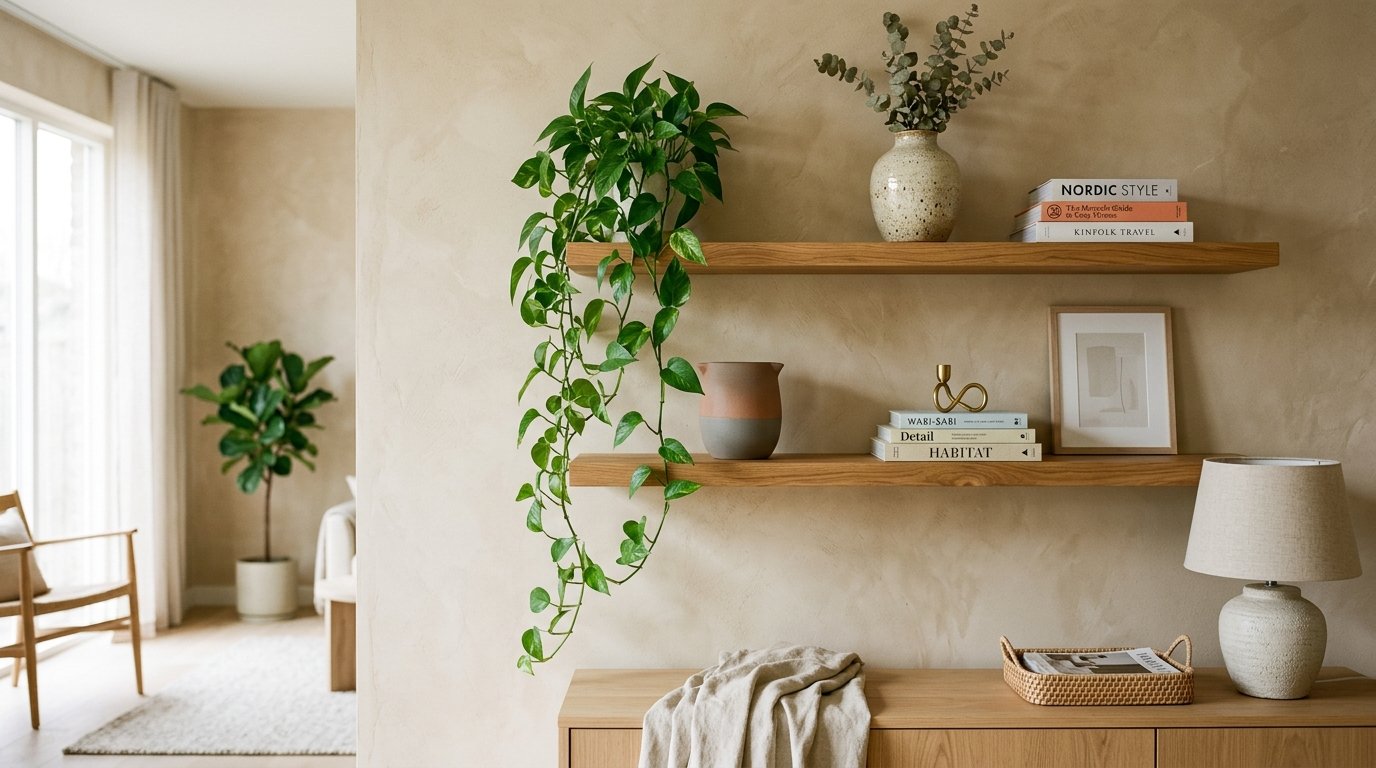
Few DIY projects promise a bigger visual transformation than hanging floating wall shelves. They turn blank drywall into display space for beloved ceramics, trailing plants, and book stacks. Yet, few simple projects go wrong quite as frustratingly fast.
You measure with a metal tape measure, punch a couple of holes, drive in anchors, tighten the brackets—and step back only to see your shelf visibly sloping downward to the left. Even worse, you set a ceramic mug on it, and the hollow drywall anchors begin wobbling out like loose teeth.
Hanging floating shelves with rock-solid stability and laser-level precision doesn't require five years of carpentry school or a $200 laser level. It just requires understanding why standard measuring techniques fail and using three foolproof trade tricks that work every single time.
• The painter’s tape transfer method eliminates measuring errors entirely by using a 1:1 physical template.
• Standard plastic ribbed conical anchors included in shelf hardware boxes should almost always be thrown in the trash—they fail under real shelf loads.
• Match your anchor to your wall type: self-drilling zinc anchors for light drywall, toggle bolts for heavy loads, and masonry anchors for brick.
• Follow the 60-30-10 styling formula once mounted to keep shelves feeling balanced rather than cluttered.
Step 1: Inspect Your Wall Type & Select the Right Anchor
The number one mistake DIYers make is using the cheap, flimsy yellow plastic anchors that come inside the shelf box. Those generic anchors are only rated for 5 to 10 pounds of downward shear weight—meaning the moment you add heavy hardcover books, the drywall pulls away.
Drywall Between Studs (Under 40 lbs): Self-Drilling Zinc Anchors
Drywall Heavy Duty (40 to 100+ lbs): Steel Snap Toggles
Direct Wood Studs (150+ lbs): 2.5-Inch Cabinet Screws
The Foolproof Painter's Tape Transfer Technique
Instead of trying to hold a heavy wooden shelf against the wall with one hand while holding a pencil and a torpedo level with the other, use this painter’s tape template trick.
Make Your 1:1 Tape Template
Level the Tape on the Wall (Not the Shelf)
Drive Anchors Straight Through the Pencil Marks
Mount the Brackets and Tighten Down
The 60-30-10 Shelf Styling Rule
Once your shelf is hung rock-solid and dead straight, the final step is styling it so it feels intentional and uncluttered:
- 60% Books & Functional Objects: Alternate vertical stacks with horizontal book piles. Use nice linen-bound covers or paperbacks you genuinely read.
- 30% Sculptural Ceramics & Glassware: Add rounded pottery, textured stone bookends, or amber glass vessels to contrast the straight linear lines of the shelf.
- 10% Organic Living Greenery: Place a small trailing pothos or string-of-pearls succulent on the top corner to let leaves soften the rigid edge.
At a Glance: Quick Comparison
| Wall Anchor Type | Recommended Wall Type | Max Safe Weight Capacity | Installation Difficulty |
|---|---|---|---|
| Self-Drilling Zinc Anchor | Drywall (hollow) | Up to 50 lbs | Very Easy (Screwdriver only) |
| Steel Snap Toggle Bolt | Drywall & Plaster | Up to 100+ lbs | Easy (Requires 1/2-in drill bit) |
| Direct Stud Screw (2.5") | Wood Stud behind wall | 150+ lbs | Moderate (Requires stud finder) |
| Plastic Conical Anchor | Solid brick / masonry only | Under 15 lbs | Not recommended for drywall |
Frequently Asked Questions
Can I hang floating shelves in a rental without causing major drywall damage?
Yes! Self-drilling zinc drywall anchors leave a clean, circular hole about 3/8-inch wide. When you move out, fill the hole with a fingertip of lightweight spackle, sand flush with a damp sponge, and dab a touch of matching paint.
How do I know if I hit a pipe or electrical wire behind the drywall?
Standard electrical cables and plumbing pipes are placed through the center of studs, at least 1.25 inches back from the drywall surface. As long as your screws don't penetrate deeper than 1.5 inches into drywall, the risk is minimal. Always use a stud finder with AC wire detection before drilling near outlets or plumbing lines.
Why is my shelf level on top but looks crooked in the room?
Ceilings and baseboards in older houses are almost never truly level. If your ceiling slopes 1/2 inch across a 6-foot wall span, a mathematically level shelf can look crooked. In rooms with noticeable ceiling sag, split the difference visually by 1/8 inch so the eye reads it as balanced.
Loved this organizing system?
Share it with a friend or pin it to your home inspiration board.
Clara Hayes
Lead EditorHome Organization & Interior Specialist
Clara is a home organization specialist with over 8 years of hands-on experience helping families and apartment dwellers create calming, functional, and clutter-free spaces. She tests every storage system and styling hack in her own home before publishing.
Reader Discussion & Tips
Real experiences and questions from mindful homemakers
The blue painter’s tape trick blew my mind. I’ve hung floating shelves in three different apartments and always ended up with slightly slanted holes using a metal ruler. The tape took literally 30 seconds and the shelf is dead-level. Thank you!
Crucial tip on the snap toggle anchors! I previously had a shelf pull out of plaster with regular conical anchors. Switched to metal toggles as described here and it holds heavy hardcover books with zero wobble.
Leave a Thought or Tip
Have you tested this routine in your home? Your email address will never be published.