
1-Day Pantry Reset: The 4-Zone System That Stops Food Waste & Reclaims 40% More Space
A complete, beginner-friendly pantry reset blueprint. Discover the 4-zone organization method, container dimension guide, and food waste prevention hacks.

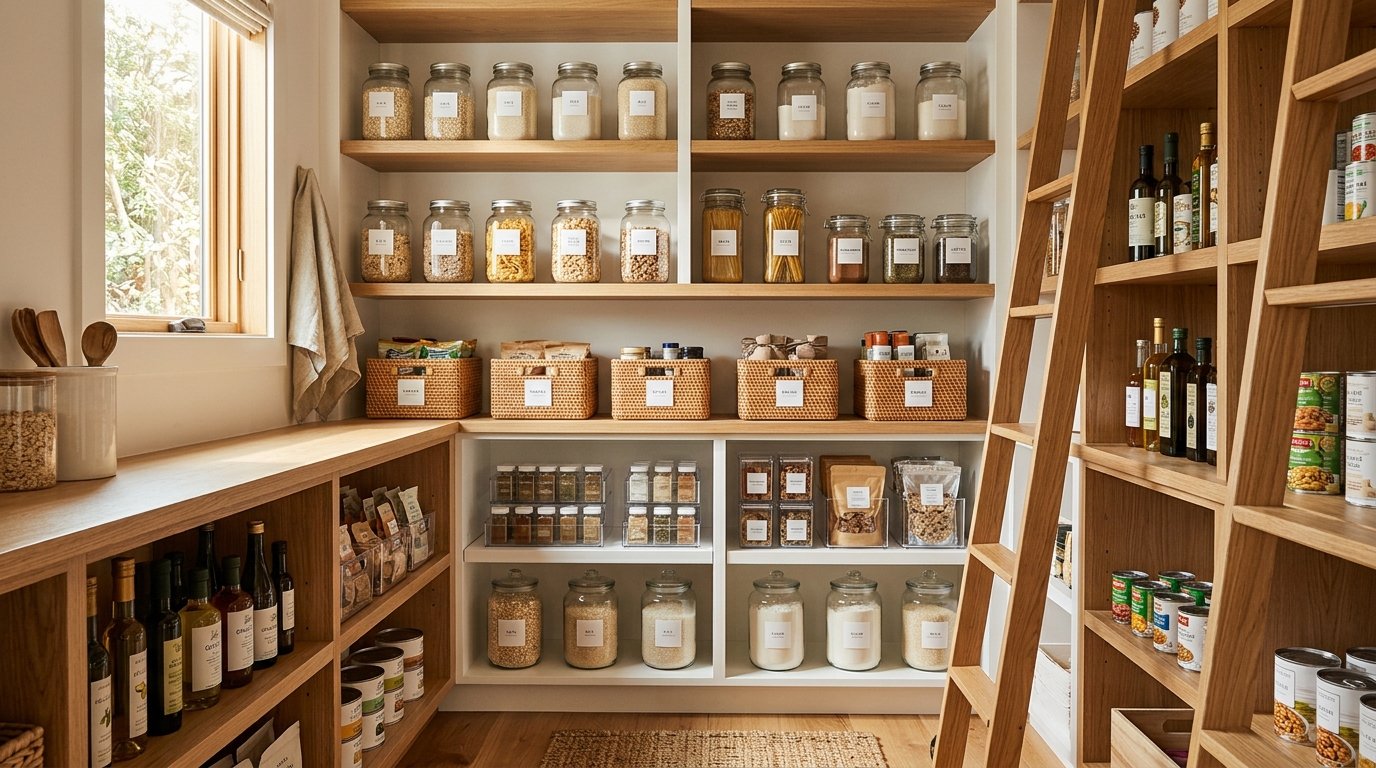
Opening your pantry door shouldn't feel like playing an anxiety-inducing game of culinary Jenga. Yet in most households, the pantry quietly transforms into a chaotic archaeological site: half-empty bags of quinoa buried behind expired broth, duplicate cans of crushed tomatoes bought because you couldn't see the first three, and cereal boxes that went stale weeks ago.
The core problem isn't a lack of discipline; it's an absence of frictionless visibility. When shelves lack defined zones and depth-appropriate organizers, items naturally migrate to the back and vanish from your daily radar.
• The 4-Zone Pantry Layout: Eye-Level Daily Essentials, Mid-Tier Dry Goods & Grains, Floor Heavy Bulk, and Shelf Door Spices.
• Match container depth (10" to 12") strictly to standard cabinet shelf depth to eliminate dead space behind bins.
• Total project investment: 90 minutes on a Saturday and approximately $35-$50 in modular organizers.
Phase 1: The 20-Minute Brutal Clean Slate
You cannot organize an active pantry by shifting boxes from left to right. You must initiate a full reset by bringing every single package out into daylight.
Clear Every Shelf Down to the Bare Wood
Group by Functional Cooking Flow (Not Brand)
- Morning Fuel: Cereals, oats, coffee beans, tea tins, and bread.
- Dinner Staples: Pasta, rice, lentils, dried beans, and canned tomatoes.
- Grab-and-Go Snacks: Nuts, granola bars, crackers, and dried fruit.
- Baking & Flavor: Flour, sugars, baking soda, oils, and vinegars.
Phase 2: Implementing the 4-Zone Pantry Blueprint
The human eye processes pantry shelves between 38 inches and 62 inches off the ground first. Everything placed above or below that prime real estate requires intentional architectural zoning.
Zone 1: Prime Eye-Level Real Estate (Everyday Essentials)
Zone 2: Decanted Staples with Airtight Perimeter Seals
Zone 3: High Shelves (Lightweight Reserves & Entertaining)
Zone 4: Floor & Bottom Shelf (Heavy Anchors & Root Veggies)
Choosing the Right Container Materials
Before purchasing organizers, review how each material performs under daily wear and kitchen humidity:
| Organizer Material | Best Food Types | Visibility | Cost per Unit | Durability / Cleaning |
|---|---|---|---|---|
| Clear BPA-Free Acrylic | Snack bags, packet mixes, fruit pouches | 100% Transparent (Instant inventory) | $8 - $14 | Hand-wash only (avoid hot dishwashers) |
| Airtight Glass Canisters | Flour, sugar, pasta, rolled oats, rice | 100% Clear with airtight silicone seal | $6 - $12 | Dishwasher safe; 100% pest-proof |
| Powder-Coated Wire Baskets | Root vegetables, canned food, bulk paper | Semi-visible grid with airflow | $9 - $16 | Wipe clean; rust-resistant |
| Natural Bamboo Caddies | Spice jars, oils, vinegar, tea boxes | Opaque (Requires top label) | $12 - $20 | Eco-friendly aesthetic; wipe with damp cloth |
The FIFO Habit: Preventing the 3-Can Dilemma
The secret to keeping your newly organized pantry pristine over months is the grocery store rule: FIFO (First In, First Out). When you return from the supermarket with new pasta or tomato sauce, place the new jars behind the existing ones on the shelf. This simple 10-second habit guarantees that food is consumed before it ever has a chance to expire.
At a Glance: Quick Comparison
| Organizer Material | Best Food Types | Visibility | Cost per Unit | Durability / Cleaning |
|---|---|---|---|---|
| Clear BPA-Free Acrylic | Snack bags, packet mixes, fruit pouches | 100% Transparent (Instant inventory) | $8 - $14 | Hand-wash only (avoid hot dishwashers) |
| Airtight Glass Canisters | Flour, sugar, pasta, rolled oats, rice | 100% Clear with airtight silicone seal | $6 - $12 | Dishwasher safe; 100% pest-proof |
| Powder-Coated Wire Baskets | Root vegetables, canned food, bulk paper | Semi-visible grid with airflow | $9 - $16 | Wipe clean; rust-resistant |
| Natural Bamboo Caddies | Spice jars, oils, vinegar, tea boxes | Opaque (Requires top label) | $12 - $20 | Eco-friendly aesthetic; wipe with damp cloth |
Frequently Asked Questions
How do I organize a deep, narrow pantry cabinet without losing items in the back?
For shelves deeper than 14 inches, use clear acrylic drawer pull-outs or long narrow plastic bins with built-in front handles. Treat each bin like an independent sliding drawer: pull the entire container forward to access items in the back, rather than blindly reaching behind cans.
Is decanting cereal and pasta into clear matching jars actually worth the effort?
Yes, but only for high-turnover staples (rice, pasta, oats, flour, and sugar). Decanting eliminates mismatched cardboard packaging that traps pests, saves up to 30% vertical space, and instantly reveals when you are running low before dinner prep.
What is the best way to store potatoes, onions, and garlic in a pantry?
Store all root vegetables in breathable open-wire baskets on the lowest or floor level in a cool, dark zone. Crucially, keep onions and potatoes in separate baskets at least 12 inches apart; onions emit ethylene gas that causes potatoes to sprout twice as fast.
Loved this organizing system?
Share it with a friend or pin it to your home inspiration board.
Clara Hayes
Lead EditorHome Organization & Interior Specialist
Clara is a home organization specialist with over 8 years of hands-on experience helping families and apartment dwellers create calming, functional, and clutter-free spaces. She tests every storage system and styling hack in her own home before publishing.
Reader Discussion & Tips
Real experiences and questions from mindful homemakers
Completed this 4-zone reset this past Saturday! We discovered four duplicate boxes of cornstarch and multiple expired broths hidden in the back corners. Re-grouping into clear bins has already cut our grocery prep time in half.
Amanda, the duplicate pantry staple phenomenon is so universal! Once you can visually scan every zone in 5 seconds, duplicate grocery purchases drop to zero. Bravo on your reset weekend!
Leave a Thought or Tip
Have you tested this routine in your home? Your email address will never be published.