
1-Day Entryway Reset: The Simple 4-Zone System That Stops Clutter at the Front Door
Learn the practical 4-zone entryway reset system that prevents front door shoe piles and morning chaos in under 2 hours without costly renovations.

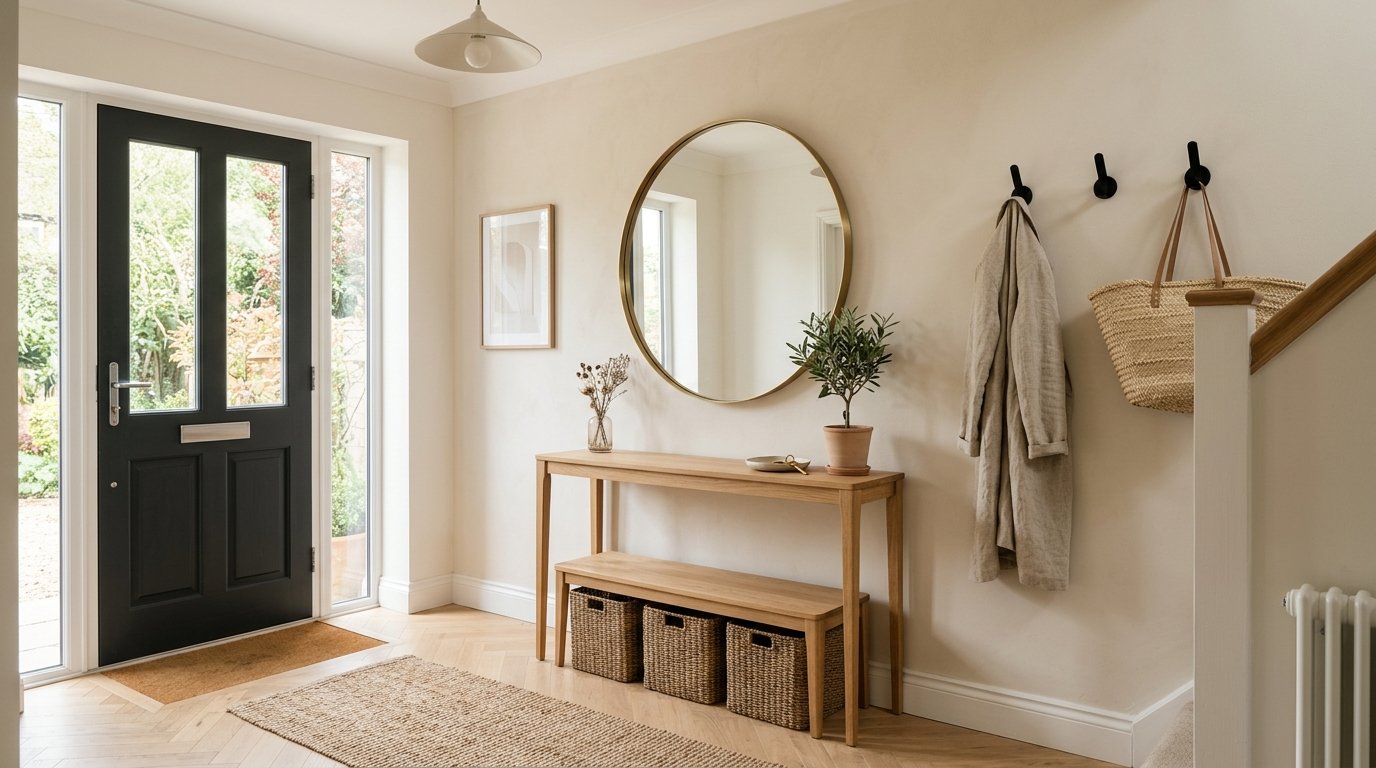
The front door is the single most demanding bottleneck in any home. It is where you shed the frantic momentum of the outside world, yet in most households, the entryway quickly degenerates into an obstacle course of scuffed sneakers, scattered mail flyers, damp umbrellas, and tote bags slumped in corners.
When you step through your front door after an exhausting day and immediately confront chaos, your brain registers unfinished chores before your coat is even unzipped. The good news? You do not need a sprawling mudroom with $5,000 custom white-oak built-in cubbies to experience order. You just need a practical, low-friction 4-zone drop system.
• High-functioning entryways rely on four distinct micro-zones: Footwear Threshold, 15-Second Landing Tray, Vertical Outerwear, and the Transit Outbox.
• Enforce the Golden Footwear Rule: only the two pairs of shoes worn daily belong at the door per household member.
• Build this entire system in 90 minutes for under $65 using renter-friendly hooks and slim furniture.
Why Conventional Entryway Organization Advice Fails
Most home decor magazines feature staging photos of vast 12-foot foyers with custom architectural benches, wainscoting, and separate hooks for pristine straw hats. For apartment dwellers, renters, or families living in compact homes where the front door opens directly into the living room, those ideas are completely unusable.
When organizing systems are too elaborate—such as requiring someone to open two cabinet doors and slide a pair of shoes into a specific fabric cubby—family members simply kick their shoes off in the middle of the floor. Effective organizing isn't about rigid perfection; it is about reducing the physical friction of putting things away.
The 4-Zone Entryway Reset Blueprint
Zone 1: The Footwear Threshold (Keep Under 14 Inches Deep)
The Capacity Rule: Limit visible footwear strictly to the two pairs each person wears daily. Specialty athletic cleats, rain boots, and seasonal heels should live in bedroom wardrobes or secondary closet shelves.
Zone 2: The 15-Second Landing Tray
Because the dish has defined boundaries, it prevents the entire console tabletop from becoming a flat-surface dumping ground for receipts and loose change.
Zone 3: Vertical Outerwear Peg Rail
Instead, install a horizontal wooden shaker peg rail mounted at eye level (58 to 62 inches from the floor). For renters who cannot drill into rental plaster, heavy-duty 5lb brass adhesive utility hooks provide identical hanging utility with zero drywall damage.
Zone 4: The Transit Outbox (Hidden Transit Basket)
Place one medium structured canvas tote or wicker lidded basket near the door. Everything leaving the house goes directly into the Outbox—grab and go in the morning.
The 2-Minute Nightly Reset Routine
No storage system, no matter how thoughtfully engineered, maintains itself indefinitely. Incorporate a frictionless 2-minute checkpoint into your evening wind-down routine:
- Return rogue shoes to their designated rack tier so tomorrow morning’s walkway is clear.
- Hang stray jackets or cardigans back on their respective peg hooks.
- Empty the landing dish of stray grocery receipts and candy wrappers.
- Toss junk circulars straight into the paper recycling bin before they migrate into the living room.
Waking up in the morning and stepping into a clean, peaceful, organized entryway completely transforms the emotional tone of your workday morning.
At a Glance: Quick Comparison
| Organizer Type | Best Hallway Width | Estimated Cost | Rental Friendly? |
|---|---|---|---|
| Slim 2-Tier Metal Shoe Rack | Narrow corridors (< 3.5 ft) | $18 – $28 | Yes (Freestanding) |
| Wooden Shaker Peg Rail | Hallways with clear drywall | $16 – $32 | Yes (Or use adhesive brass hooks) |
| Floating Console with Key Dish | Small foyers (4 to 5 ft) | $35 – $75 | Yes (Minimal wall anchor points) |
| Storage Bench with Baskets | Spacious entries (5+ ft) | $65 – $130 | Yes (Dual seating + hidden bins) |
Frequently Asked Questions
How do I organize an entryway that opens directly into a narrow kitchen or living room?
Use vertical wall space rather than floor space. A wall-mounted peg rail, an 8-inch floating shelf with a key bowl, and an ultra-slim shoe cabinet provide full 4-zone functionality without stealing more than 8 inches of corridor floor space.
What is the best way to manage muddy boots and melting snow in winter?
Place a heavy-duty rubber boot tray with raised 1-inch lips filled with smooth river stones. Water drains beneath the stone layer so boot soles dry twice as fast without creating standing puddles or damp odors.
How do I get kids or partners to actually use the drop zones?
Keep friction at absolute zero. If putting a coat away requires sliding a wooden hanger onto a tight closet rod, kids will drop it on the bench. An open peg hook requires half a second—everyone uses it.
Loved this organizing system?
Share it with a friend or pin it to your home inspiration board.
Clara Hayes
Lead EditorHome Organization & Interior Specialist
Clara is a home organization specialist with over 8 years of hands-on experience helping families and apartment dwellers create calming, functional, and clutter-free spaces. She tests every storage system and styling hack in her own home before publishing.
Reader Discussion & Tips
Real experiences and questions from mindful homemakers
The 15-second landing tray tip completely stopped the mail avalanche on our kitchen counter. We used a shallow stoneware dish we already had, and even my kids actually drop their school badges and keys into it now!
That makes me so happy to hear, Sarah! The physical boundary of a small bowl is psychological magic — when the perimeter is clear, clutter simply cannot spread. Thank you for testing the system!
For anyone wondering about the boot tray: we put washed river stones in ours like Clara recommended and our wet boots dry twice as fast without any damp rubber smell. Super practical guide.
Leave a Thought or Tip
Have you tested this routine in your home? Your email address will never be published.